
Morogoro, Tanzania - A team of researchers from the Sokoine University of Agriculture (SUA), in partnership with the Udzungwa Mountains National Park (UMNP), has officially documented one of the most extraordinary botanical discoveries in East African history: a giant Khaya anthotheca (East African Mahogany) tree standing a staggering 64.5 metres tall - making it the tallest known tree in the entire Eastern Arc Mountains and the second tallest indigenous tree in Africa (Fig 1).
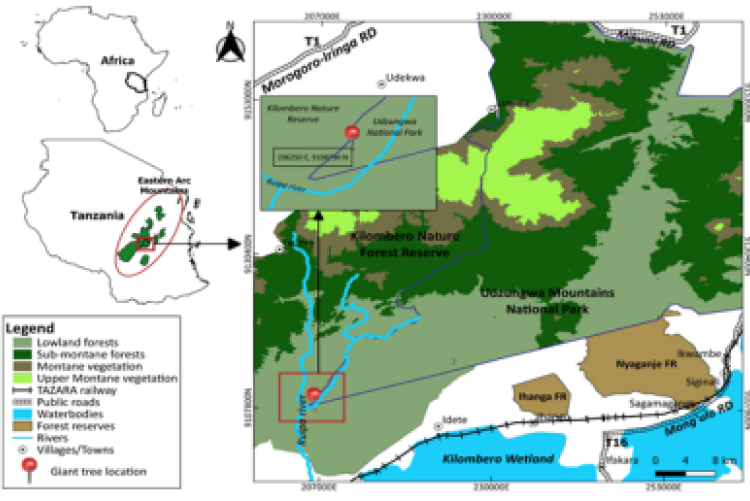
Figure 1:Location of the giant tree at Ruipa, Southern Udzungwa Mountains National Park, Tanzania
The discovery, led by Prof. Fortunatus B.S Makonda and Mr. Mbonea J. Mweta, was made deep in the Ruipa River area, a remote southern sector of the Udzungwa Mountains National Park.
A True African Giant
The tree, nicknamed the "Ruipa Giant," is not just tall. Its measurements are breathtaking:
- Height: 64.5 metres (equivalent to a 21-storey building).
- Diameter at Breast Height (DBH): 265 cm (measured above its massive buttresses).
- Basal Area: Approximately 5.52 m², indicating a massive carbon storage capacity.
- Crown Spread: 16 metres, with a dense, healthy canopy blocking 70% of sunlight.
Only one tree in Africa is taller: the famous Entandrophragma excelsum on the slopes of Mount Kilimanjaro, which reaches 81.5 metres. However, the Ruipa Khaya anthotheca is the undisputed giant of the Eastern Arc biodiversity hotspot (Figure 2).
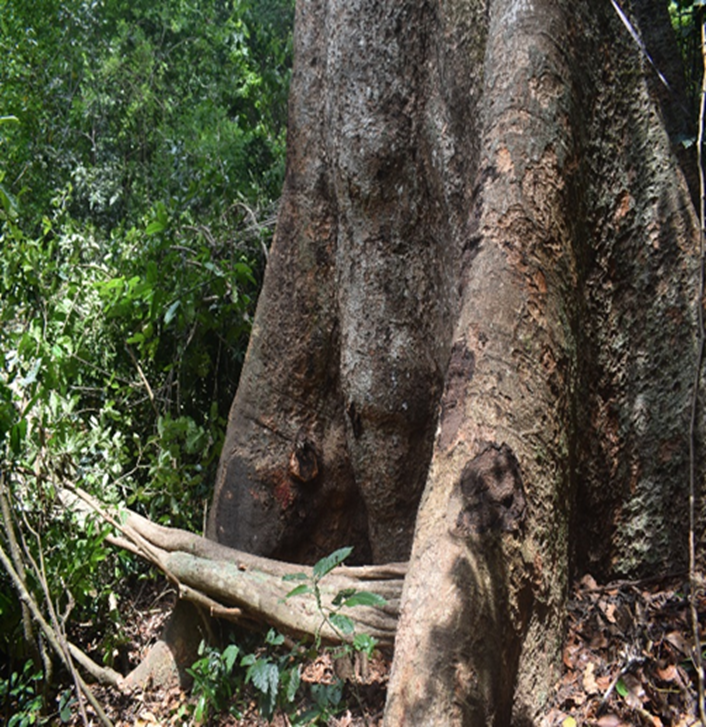
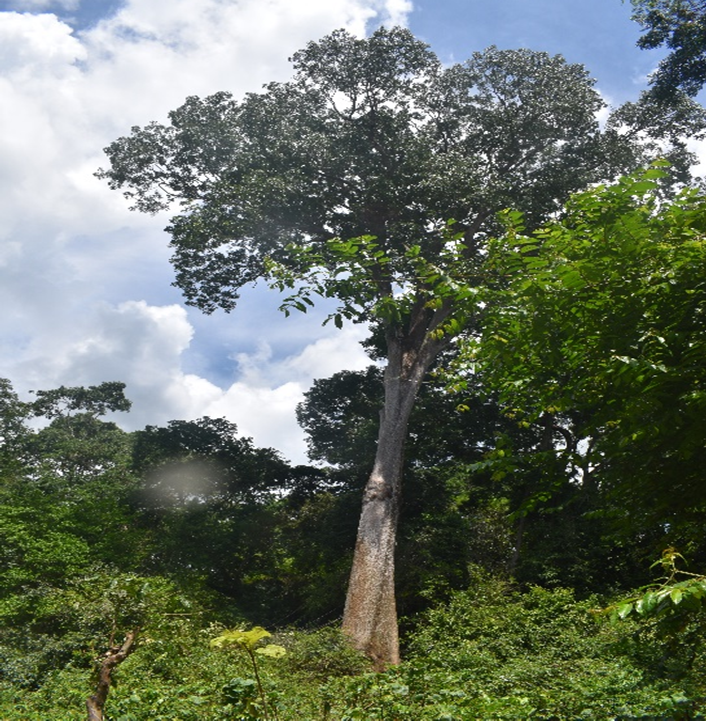
Figure 2: Tree form of the giant Khaya anthotheca
Why This Discovery Matters
This finding is more than just a record. According to the researchers, the tree represents a rare survivor. Khaya anthotheca is listed as Vulnerable on the IUCN Red List due to historical logging and habitat loss.
"The Ruipa Giant has survived because it sits within a strictly protected national park, far from the chainsaw," said Prof. Makonda, the lead researcher. "This tree is a living biological monument. It tells a story of long-term ecosystem stability and the critical importance of riparian forests for climate resilience."
The tree is located only 13.7 metres from the Ruipa River, benefiting from deep, alluvial soils and consistent moisture. The surrounding forest is a pristine lowland riparian ecosystem, home to species like Milicia excelsa (Mvule) and Antiaris toxicaria (Mkuzi).
Ecological and Tourism Potential
The research team assessed the tree's health as "excellent," with a dense crown, no signs of disease, and massive buttresses reaching 3.1 metres up the trunk. The tree is likely several centuries old, and the team recommends non-destructive dendrochronology (tree-ring analysis) to determine its exact age.
Beyond science, the Ruipa Giant holds immense potential for low-impact ecotourism. Located approximately 11.3 km on foot from the Ruipa Ranger Station, the tree could become a flagship attraction for nature-based tourism, environmental education, and conservation messaging in the Udzungwa Mountains.
A Call for Heritage Protection
Based on their findings, the SUA research team has made several key recommendations to the government and Tanzania National Parks (TANAPA):
- Formal Heritage Status: Officially designate the Ruipa Giant as a Natural Heritage Feature within UMNP.
- Protective Buffer Zone: Establish a demarcated zone around the tree to protect its root system from trampling.
- Long-term Monitoring: Conduct biometric re-measurements every 3-5 years to track its health.
- Scientific Research: Fund age determination (dendrochronology/radiocarbon) and genetic studies.
A Model for Conservation
TANAPA funded this study through the Udzungwa Mountains National Park. The research team emphasizes that documenting "monumental trees" is a strategic tool for conservation.
“Every giant tree is a keystone structure - it stores carbon, provides habitat for birds and insects, and captures the imagination of the public,” added Mr. Mweta. “By protecting the Ruipa Giant, we protect an entire ecosystem.”
For more information or to arrange a research visit, please contact: Prof. Fortunatus B. Makonda - makonda@sua.ac.tz
Keywords: Khaya anthotheca, Giant Tree, Udzungwa Mountains, Eastern Arc, Conservation, Sokoine University of Agriculture, Tanzania.
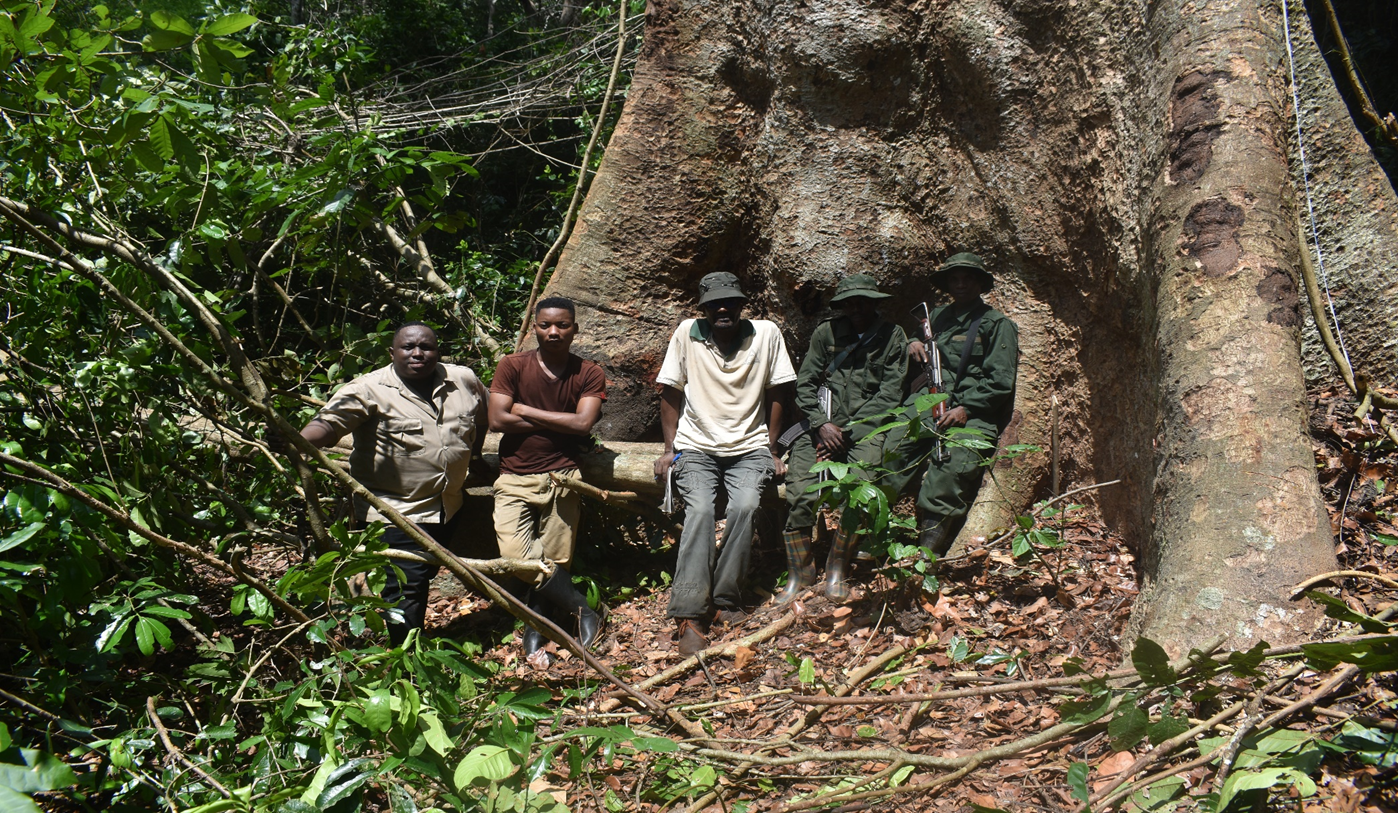
Photo 1: The research team (Sokoine University of Agriculture) and Tanzania National Parks (TANAPA) personnel at the base of the giant Khaya anthotheca, illustrating the scale of its buttressed trunksecond tallest tree.tallest tree.
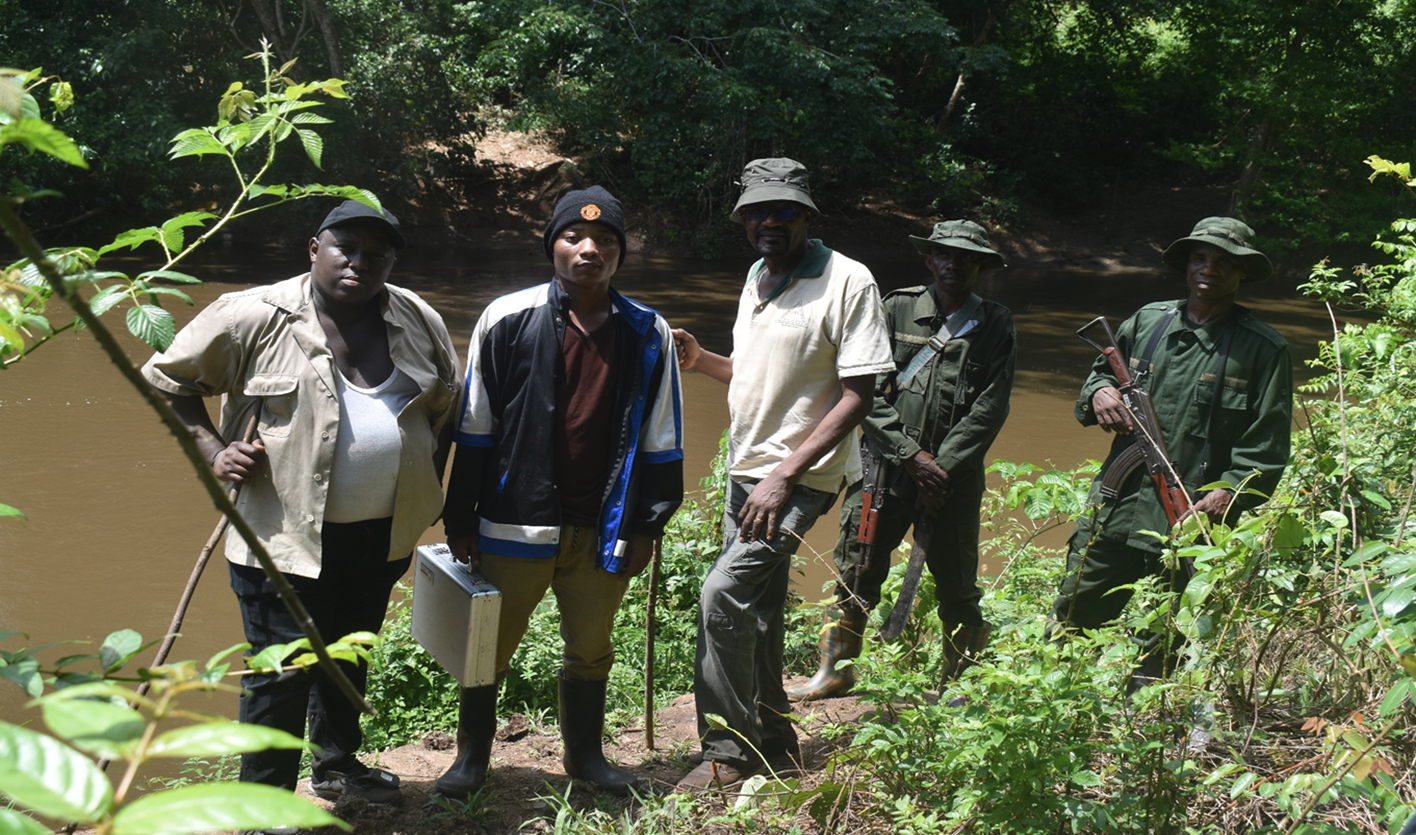
Photo 2: SUA researchers and Udzungwa Mountains National Park staff beside the Ruipa River – the riparian habitat that nurtures the giant Khaya anthotheca.
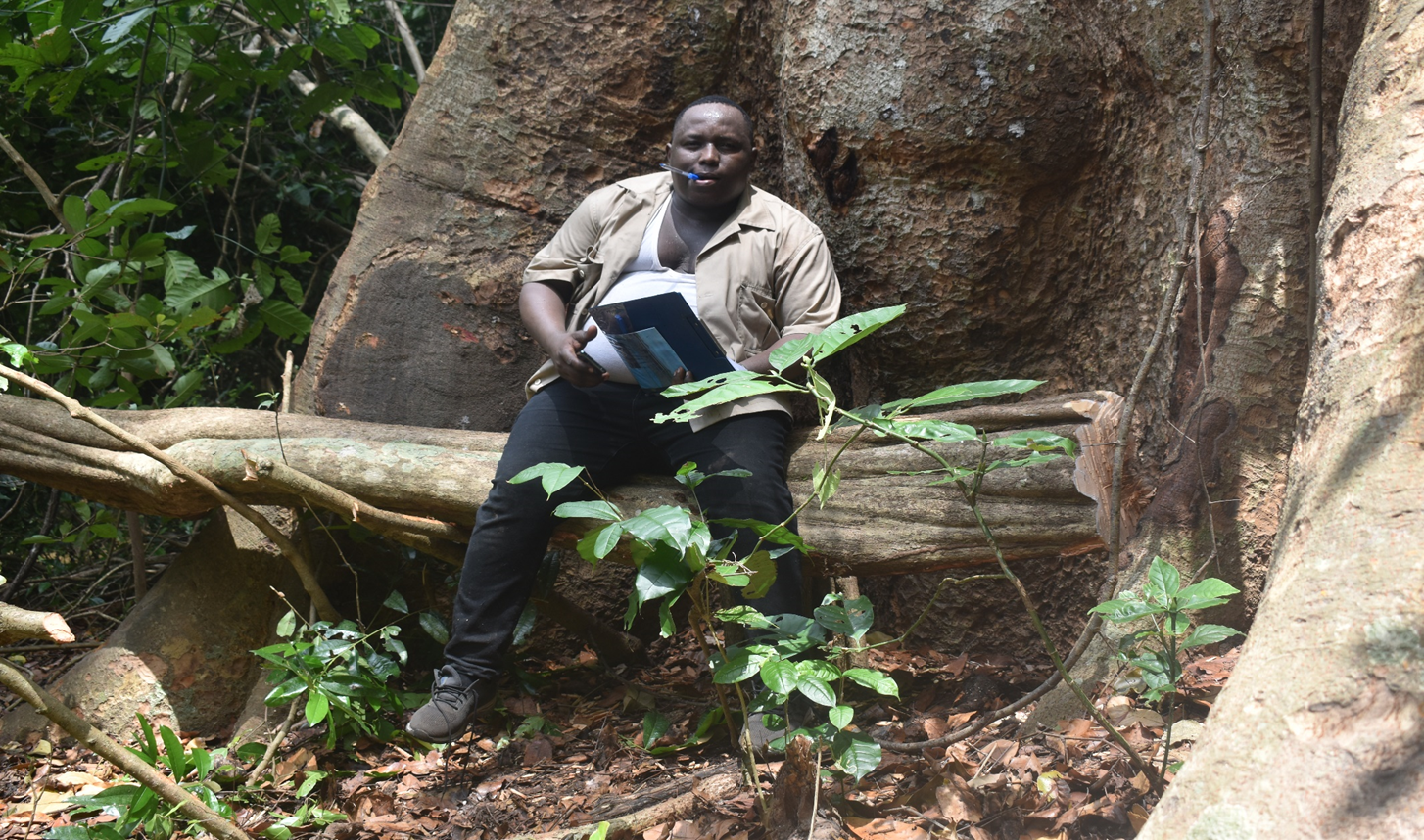
Photo 3: SUA researcher (Mr Mweta) collecting data beside the massive buttresses of the giant tree, near the Ruipa River.
Share this page


